Data-Driven Business Management, Corporate Governance, and Organizational Performance
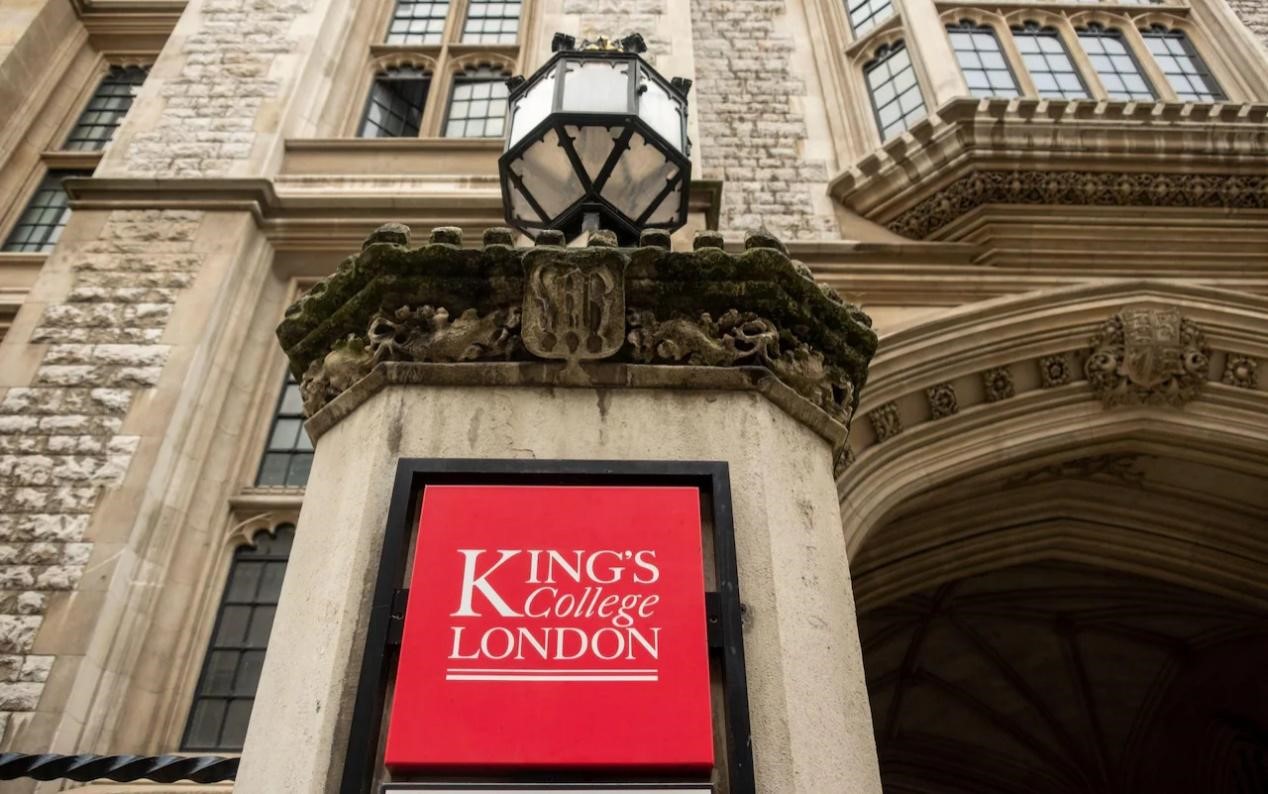
| Organizer | King’s College London |
| Submission Deadline | August 14, 2026 |
| Notification of Acceptance | 7-20 workdays |
| Submission Email | sympo_london@icemgd.org |
| Registration Fees | USD 450 (6 pages included) |
| Additional Page | USD 40/extra page |
| Download | Manuscript Template |
Background
Hosted within the framework of the 10th International Conference on Economic Management and Green Development (ICEMGD 2026), this symposium explores how data-driven technologies and evolving workplace arrangements are changing the ways firms are managed, governed, and evaluated. The rapid diffusion of data analytics and artificial intelligence has fundamentally reshaped how firms organise work, make decisions, and govern performance. In parallel, disruptive policy shifts, most notably the large-scale expansion of homeworking (WFH) arrangements and emerging regulation around AI and digital technologies, have altered managerial practices and organisational structures. WFH policies, initially driven by external shocks and later institutionalised by firms and governments, have transformed monitoring, coordination, and incentive design. At the same time, AI technologies increasingly influence hiring, evaluation, forecasting, and strategic decision-making. These developments raise new questions about productivity, governance, inequality, and organisational effectiveness. Understanding how firms adapt to WFH and AI within data-driven environments is now central to research at the intersection of management, economics, and organisational performance.
Goal/Rationale
The goal of this symposium is to study how WFH policies and AI adoption interact with data-driven management practices to shape corporate governance and organisational performance. While WFH can improve flexibility and worker satisfaction, it also challenges traditional supervision, information flows, and performance measurement. Similarly, AI promises efficiency and scalability but raises concerns about bias, accountability, and decision authority within organisations. A core challenge is to identify when these disruptions enhance productivity and governance, and when they generate coordination failures or misaligned incentives. Recent advances in administrative data, digital trace data, and empirical methods enable researchers to rigorously analyse these questions at scale. The symposium aims to highlight cutting-edge research that uses data to measure how WFH and AI affect management practices, organisational design, and firm outcomes. The broader objective is to inform both managerial strategy and policy design in an economy where work and decision-making are increasingly mediated by data and algorithms.
Scope and Information for Participants
The symposium invites contributions that examine WFH and AI as central disruptive forces in data-driven organisations. Relevant themes include but are not limited to: the productivity and performance effects of remote and hybrid work, managerial monitoring and incentives under WFH, AI in hiring, evaluation, and task allocation, governance and accountability in algorithmic decision-making, and policy responses to digital labour and AI adoption. Contributions may analyse firm-level outcomes, worker behaviour, organisational structure, or inequality implications. Empirical, theoretical, and methodological papers are all welcome, particularly those using rich data to study management practices and organisational performance. Submissions should speak directly to how disruptive work arrangements and AI technologies reshape firms and institutions.
Publication
| Proceeding Title | Advances in Economics Management and Political Sciences (AEMPS) |
| Press | EWA Publishing, United Kingdom |
| ISSN | 2754-1169/2754-1177 (electronic) |
Accepted papers will be published in Advances in Economics, Management and Political Sciences (AEMPS) (Print ISSN: 2754-1169) and will be submitted to Conference Proceedings Citation Index (CPCI), Crossref, CNKI, Portico, Google Scholar and other databases for indexing. The situation may be affected by factors among databases like processing time, workflow, policy, etc.
* The papers will be exported to production and publication on a regular basis. Early-registered papers are expected to be published online earlier.
This symposium is organized by ICEMGD 2026 and it will independently proceed the submission and publication process.



Highlights
This one-day symposium brought together undergraduate, master's, and doctoral students from King's Business School to explore how data-driven approaches can support organisational decision-making, performance management, and innovation. The event began with a keynote symposium on the use of conditional volatility measures in understanding, predicting, and managing organisational outcomes through economic indicators. Participants were introduced to key concepts from financial and economic analysis and engaged in practical discussions on how uncertainty and volatility can inform strategic decision-making in organisations.
The keynote session was complemented by a hands-on applied symposium led by a doctoral researcher, allowing participants to explore data analysis techniques and practical applications using real-world examples. The interactive format encouraged active engagement and discussion among attendees from different academic backgrounds.
The afternoon featured two doctoral student presentations on emerging topics at the intersection of data analytics, behavioural science, and artificial intelligence. The first presentation examined how behavioural nudges can be used in data management systems to improve organisational performance and support more effective decision-making. The second explored the analysis of student-teacher interactions in educational settings where Generative AI tools are increasingly integrated into teaching and learning.


Access to Symposium: ICEMGD 2026 Symposium -- London - YouTube